FILE Nº 0397 · History · DECLASSIFIED
110 Years Since the Ottoman Empire's Genocide of the Armenians
TL;DR — 24 April 2025 marked the 110th anniversary of the Armenian Genocide, with commemorations held around the world.
24 April 2025 marked the 110th anniversary of the Armenian Genocide. Commemorations were held around the world to mourn the more than 1.5 million dead and to stress the importance of remembering this brutal event in human history.
It began as the Ottoman Empire entered a period of decline in the early 20th century and nationalist currents arose among the empire's various ethnic groups, particularly the Armenians, whose religion and culture differed from the Muslim majority.
When the First World War broke out in 1914, tensions grew even higher. The Ottoman government decided to join the Central Powers, Germany and Austria, which made the eastern front bordering Russian territory a key strategic area. Some Armenians sided with Russia, but the Ottoman government accused all Armenians of being a threat to security...
24 April 1915 is regarded as the start of the tragedy, because the Ottoman government arrested more than two hundred Armenian intellectuals, religious leaders and activists in Constantinople. These arrests were not sudden but systematically planned, and some of those arrested were sent to faraway places and never seen again.
The Ottoman government also issued orders deporting Armenians in the eastern part of the empire from their homeland, claiming this was to "maintain the state's order in wartime".
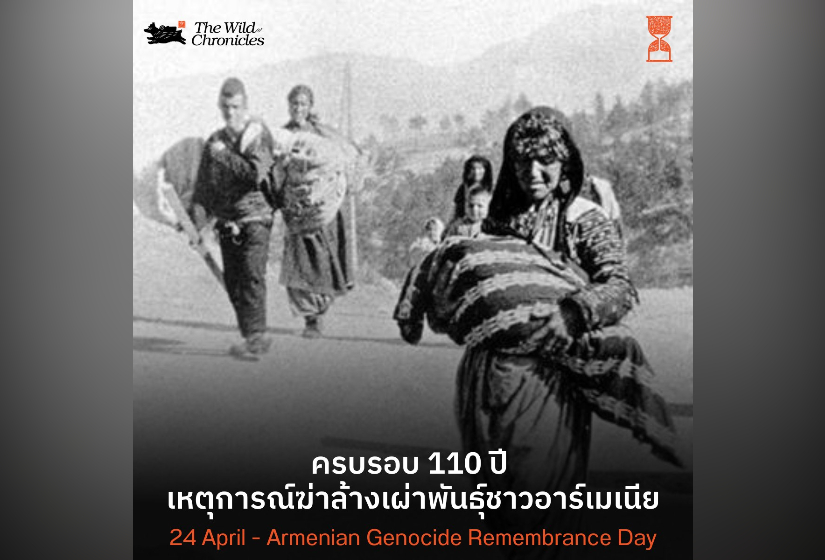
Those deportation columns were death marches. Women, children and the elderly were forced to walk through the Syrian desert with no water, food or shelter. Along the way they were raped, plundered and killed without mercy by Ottoman soldiers and local armed groups.
Some villages that resisted were burned down, churches and monasteries were razed, and Armenian historical documents, literature and art were wiped from the land where they had lived for a thousand years.
The genocide left about 1.5 million Armenians dead, and several hundred thousand more fled to settle anew in Lebanon, Syria, Georgia, Russia, the United States and Western Europe. It is regarded as one of the greatest tragedies of the 20th century and is often called "the first genocide of the modern age".
Though more than a century has passed, the Turkish government today still denies that the event was genocide, claiming it was a consequence of civil war and the betrayal of some Armenian groups. However, documents, testimonies and records from foreign diplomats who were present all clearly point to the Ottoman government's intent to systematically destroy the Armenian people.
Every year on 24 April, Armenians around the world join together to light candles, lay flowers and march in remembrance of those lost, hoping that the pain of the past will become a force that keeps humanity from repeating such cruelty, and calling on the world to remember the truth without distortion: that some people were once exterminated simply because they were born different from their rulers...
#TWCHistory #TWCArmenia #TWCTurkey #TWC_Rama