FILE Nº 0644 · War · DECLASSIFIED
Debts of Gratitude, Grudges of Blood: Turkey and the Kurds
TL;DR — The background to the conflict between Turks and Kurds, a dispute that has dragged on to the present day.
To understand the Turkish-Kurdish conflict today, we first have to study history, especially Turkey's history after World War I. This article explains how this tangle of favors and grudges came about.
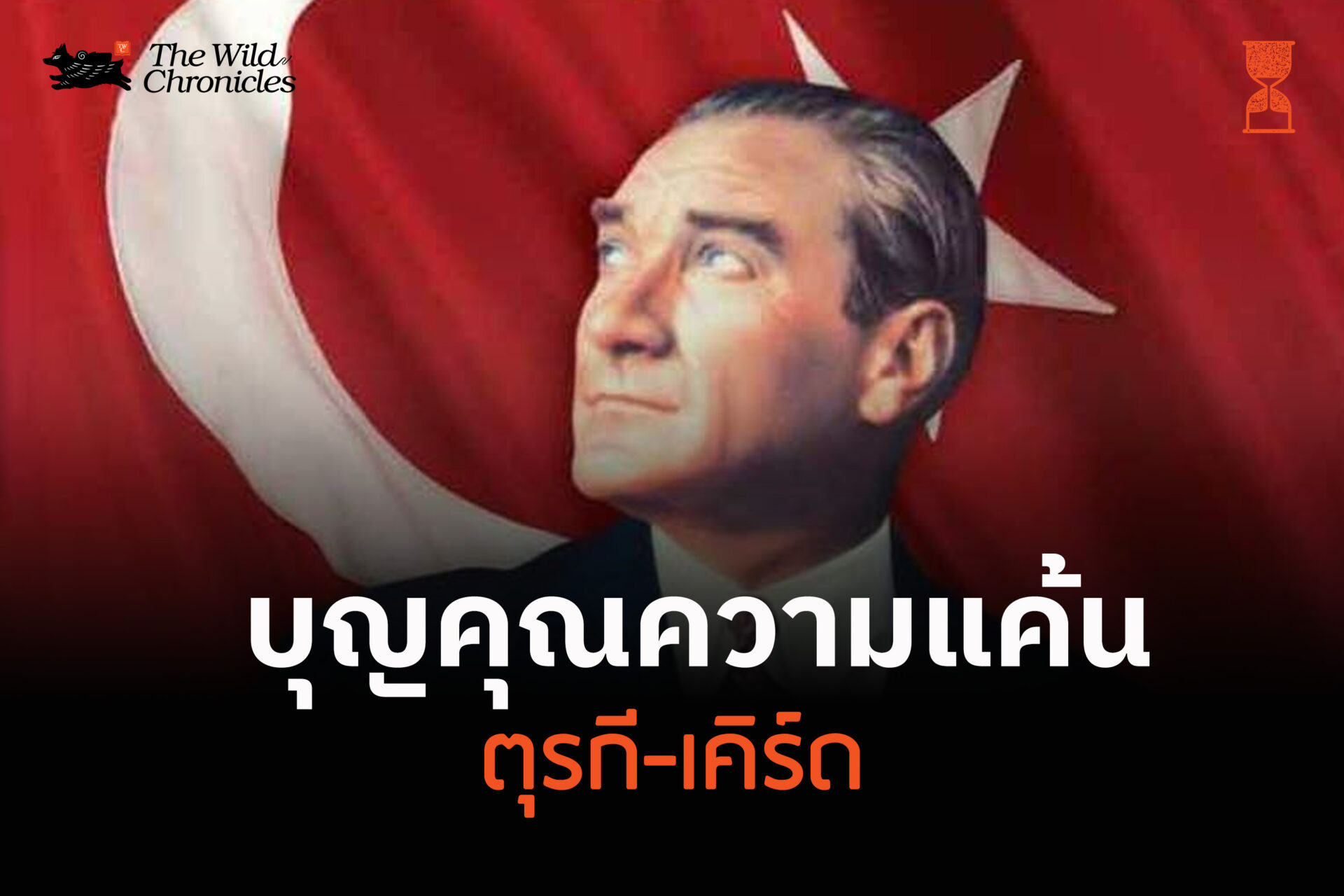
The story of the Kurdish-Turkish conflict today might begin with the man in the picture, Mustafa Kemal Atatürk, the father of modern Turkey. But before we mention him, we need to lay some groundwork.
The Kurds are one of the Aryan peoples, of the same ethnic stock as the Persians of Iran. The difference is that the Kurds lived in the mountains, while the Persians lived in cities and were more prosperous.
In the age of the Crusades, the Kurds had a hero named Saladin. He led the Muslims to victory in the Crusades and founded a great empire, the Ayyubid Sultanate, which covered wide areas of Egypt, Syria, Iraq and Saudi Arabia, and for a time led the Islamic world. After the Ayyubids, the Kurds had several other kingdoms of their own, but they were usually small, and none ever matched the Ayyubids.
In the late 13th century, the Turks, who had been steppe tribes living beyond the Great Wall of China and who had migrated to the Middle East some time earlier, embraced Islam and founded a new empire of their own, the Ottoman Empire.
The Ottomans were hugely successful. They broke through the walls of Constantinople, capital of the Eastern Roman Empire, and built their new empire across the Anatolian peninsula, which had once been Western (Frankish) land.
At its peak, the Ottoman Empire ruled vast areas of the Middle East, North Africa and Eastern Europe, taking lands that would later become Iraq, Syria, Saudi Arabia, Israel, Egypt, Libya, Algeria, Greece, Serbia, Hungary and many more.
Through the several centuries of Ottoman glory, the Kurds, Arabs, Greeks, Armenians and many other peoples all bowed beneath this great empire.
The Ottoman sultans always regarded themselves as leaders of the Islamic world, competing for prestige with neighboring Iran.
Later, in World War I (1914-1918), the Ottomans, by then in decline, joined the Central Powers (led by Germany, Austria and the Ottomans) against the Allies (led by Britain, France, Russia and later America).
At that time the Allies wanted to strip the Ottomans of their power, so they stirred up the peoples who had lived under Ottoman rule to rebel, especially the Arabs. If you have seen the film Lawrence of Arabia, Lawrence was the British officer who persuaded the Arabs to do just that. The Kurds, too, rebelled against the Ottomans several times, but were put down.
When World War I ended in an Allied victory, the victors began to discuss what to do with the Ottomans. (Thailand stayed neutral until it saw the Allies gaining the upper hand, then joined in, and so shared in the victory.)
The Allied powers negotiated the Treaty of Sèvres, agreeing to carve the Ottoman Empire into pieces. What was left for the Turks was a small yellowish lump on the map. Britain took some, France took some, Italy took some, and some went to Greece and some to Armenia. There was also a portion meant for the Kurds, in the southeast, with the city of Diyarbakir as its main city.
With the homeland pushed down like this, how could a proud man of noble breed accept it? General Mustafa Kemal Pasha, the hero who had beaten the Allies at Gallipoli, rose up to save the nation! (Gallipoli was one of the few major battles the Ottomans won in World War I.)
Mustafa led the Turks to conquer the Greeks, subdue the French, crush the Armenians and beat down the British, winning back much of Turkey's land. Later generations call this war the "Turkish War of Independence" (1919-1923).
Riding on that victory, Mustafa pressed the Allies into a new treaty, the Treaty of Lausanne, which was far more favorable to Turkey. Time magazine put him on its cover in 1923 under the headline "Where is a Turk his own master?"
Of course, the Treaty of Lausanne made no mention of Kurdistan... because if Turkey had let the Kurds become independent, it would have lost a large, resource-rich area in the east.
Mustafa founded the Republic of Turkey. He made Turkey a secular state, abolished the sultanate, destroyed the influence of religion, and promoted Turkish nationalism.
Mustafa Kemal was later given a new name, Atatürk, or "Father of the Turks." He believed that only nationalism, not an emphasis on religion, could make Turkey prosper.
He also placed the Turkish people above other peoples, tried to assimilate the nations under his rule, the Kurds included, suppressed their rights in many ways, and even banned education in their own language. Really, this man was rather like Field Marshal Plaek Phibunsongkhram of Thailand.
Under the Republic of Turkey, the Kurds were oppressed, killed and forcibly relocated, so that they could be easily assimilated in service of the Greater Turkey policy.
All this bred a great deal of resentment, driving the Kurds up into the mountains and the forests to rebel against Turkey, a struggle that continues to this day.
On the other hand, turning Turkey into a less religious state set it on the same path of development as the Western nations.
Turkey's lack of strictness goes so far that belly dancing by women is widespread and gay bars flourish in large numbers even now. To understand Turkey, you have to see it as entirely separate from its devoutly religious neighbors.
Today, Turkey's leader, Erdoğan, favors religion and has begun bringing religious devotion back into society.
Some critics say Erdoğan is trying to return Turkey to leadership of the Islamic world, as in the Ottoman era. It sounds contradictory that a country with such low religiosity as Turkey could become a religious leader.
...But Turkey has stepped in just as Saudi Arabia is in decline... Look across the whole region and no other Islamic nation has risen to such power (except Iran, which does not count because it is Shia, unlike most Muslims, who are Sunni). So when Erdoğan sends his army to crush the Kurds, some Muslims cheer him on, thinking it is done for Islam. (Most Kurds are Sunni Muslims, but the PKK, which fights Turkey, follows a socialist line that does not emphasize religion.)
In fact, Erdoğan has tried to negotiate with the Kurds before, without success. So for the sake of Turkey's greatness, Erdoğan still has to keep pressing the Kurds into submission as before.
Setting religion aside, whether Turkey is justified in suppressing the Kurds is hard to say, because it is like asking whether the Thai state is justified in suppressing the Pattani insurgency.
The oppression of villagers did really happen in the past. The people of Pattani want to separate because they want to govern themselves, and in one way that sounds reasonable. But would separation really be good for them? Wouldn't staying together actually be better?
So Turkey's question is "How can the Kurds under its rule be made to live in peace and contentment, so that they no longer think of breaking away as they do now?" But with the way the conflicts in the Middle East are going, that looks very far from reality...