An 8-day Silk Road history tour through Gansu's Hexi Corridor, from Lanzhou, Wuwei, Zhangye and Jiayuguan to Dunhuang, with the Rainbow Mountains, the Mogao Caves and Crescent Lake.
Trip highlights
- Follow Zhang Qian, Xuanzang and Marco Polo along the Silk Road, the historic highway that connected the world
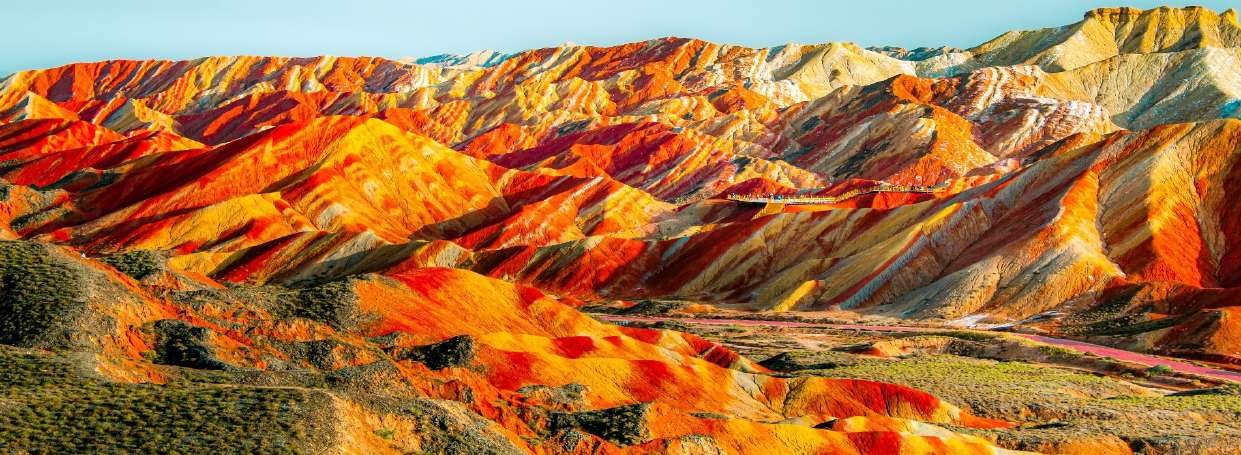
- The Zhangye Rainbow Mountains, a UNESCO Global Geopark
- Jiayuguan Fort, the 'First and Greatest Pass Under Heaven', a UNESCO World Heritage site
- The Mogao Caves of Dunhuang, among the most important and greatest sites of Buddhist art in the world
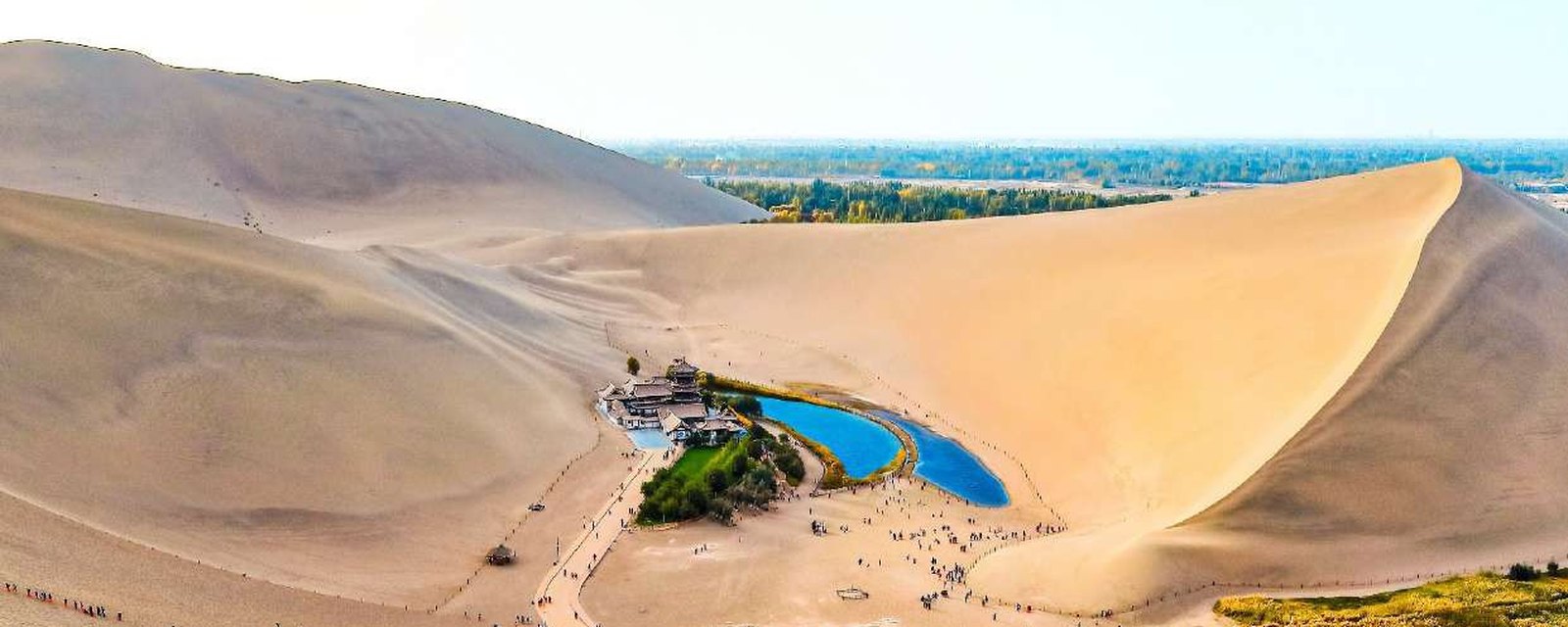
- A camel ride on the Mingsha Singing Sand Dunes and a visit to Crescent Lake (fee included)
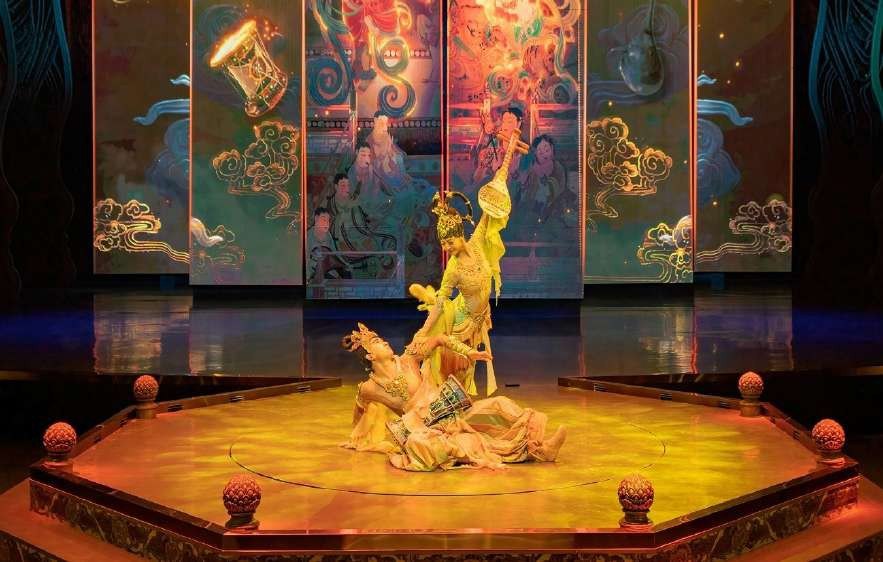
- The Ancient Sound of Dunhuang show
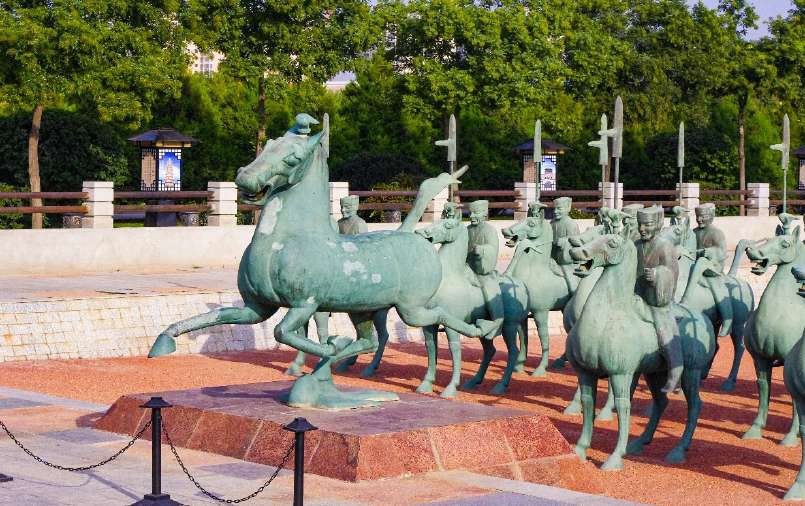
- The Flying Horse of Gansu at the Gansu Provincial Museum and China's largest clay reclining Buddha
- 19-26 March 2027, 8 days 6 nights, 4-5 star hotels
Highlight places
Led by historiansEvery trip travels with an expert history lecturer who brings each site to life in plain language.
Off the beaten pathCentral Asia, the Middle East, the Himalayas — places most tour companies never go.
Private groups, no rushingRight-sized groups and unhurried time at the places that matter most.
Beyond ordinary travelEvery tour is designed by writers and professional travellers to create experiences that reflect who you are — for travellers who want more than an ordinary holiday.
About this tour
China: Silk Road – Journey for the Scriptures is an 8-day, 6-night history tour departing 19 March 2027 and returning 26 March 2027. It follows the Hexi (Gansu) Corridor of the ancient Silk Road from Lanzhou through Wuwei, Zhangye and Jiayuguan to the desert oasis of Dunhuang, tracing the footsteps of the envoy Zhang Qian, the monk Xuanzang and Marco Polo.
Highlights include the Flying Horse of Gansu in the Gansu Provincial Museum, the Kumarajiva (Jiumo Luoshi) Temple in Wuwei, the Leitai Han Tomb, the 35-metre reclining Buddha of Dafo Temple, the Rainbow Mountains of the Zhangye National Geopark (UNESCO Global Geopark), the Jiayuguan Great Wall Fort (UNESCO World Heritage), the Mogao Caves (UNESCO World Heritage), the Ancient Sound of Dunhuang show, and a camel ride on the Mingsha Singing Sand Dunes at Crescent Lake.
The group flies out with China Southern Airlines via Guangzhou to Lanzhou and returns with China Eastern Airlines from Dunhuang via Shanghai. Hotels are 4-5 star, and the tour is led by a Thai lecturer and tour leader with a local guide. Prices start at 69,900 baht per person including economy flights.
Day-by-day itinerary
Day 1Bangkok – Guangzhou – Lanzhou
Meet at 05:00 at Suvarnabhumi Airport (BKK), 4th floor departures hall, at the China Southern Airlines check-in counters.
- 08:10: fly to Guangzhou on CZ362, about 2 hours 45 minutes (snack served on board).
- 11:55: arrive at Guangzhou Baiyun International Airport (CAN) for a stopover of about 4 hours 5 minutes (no lunch provided).
- 16:00: fly to Lanzhou on CZ3385, about 3 hours 10 minutes (meal served on board).
- 19:10: arrive at Lanzhou Zhongchuan International Airport (LHW).
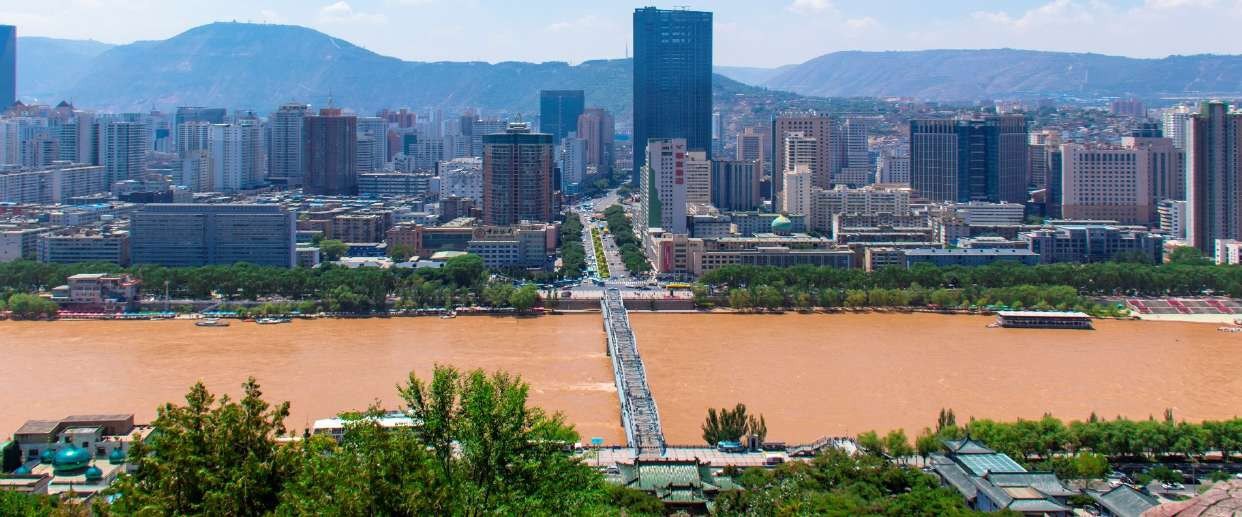
Lanzhou, capital of Gansu Province, has more than 2,200 years of history and was once called Jincheng, the 'City of Gold'. Under the Han dynasty it was a military and trading hub on the Silk Road.
In 138 BC Emperor Wu of Han sent the envoy Zhang Qian west to ally with the Yuezhi, enemies of the Xiongnu. On that journey Zhang Qian found the Gansu (Hexi) Corridor, the route that first linked China with Central Asia and the West.
Day 2Lanzhou – Wuwei
Visit the Gansu Provincial Museum, the largest museum in Gansu, founded in 1956, with more than 350,000 artefacts. Its star piece is the Flying Horse of Gansu (the 'bronze horse galloping on a flying swallow'), a Han-dynasty bronze that became the symbol of Chinese tourism in 1983 and may not be exhibited outside mainland China.
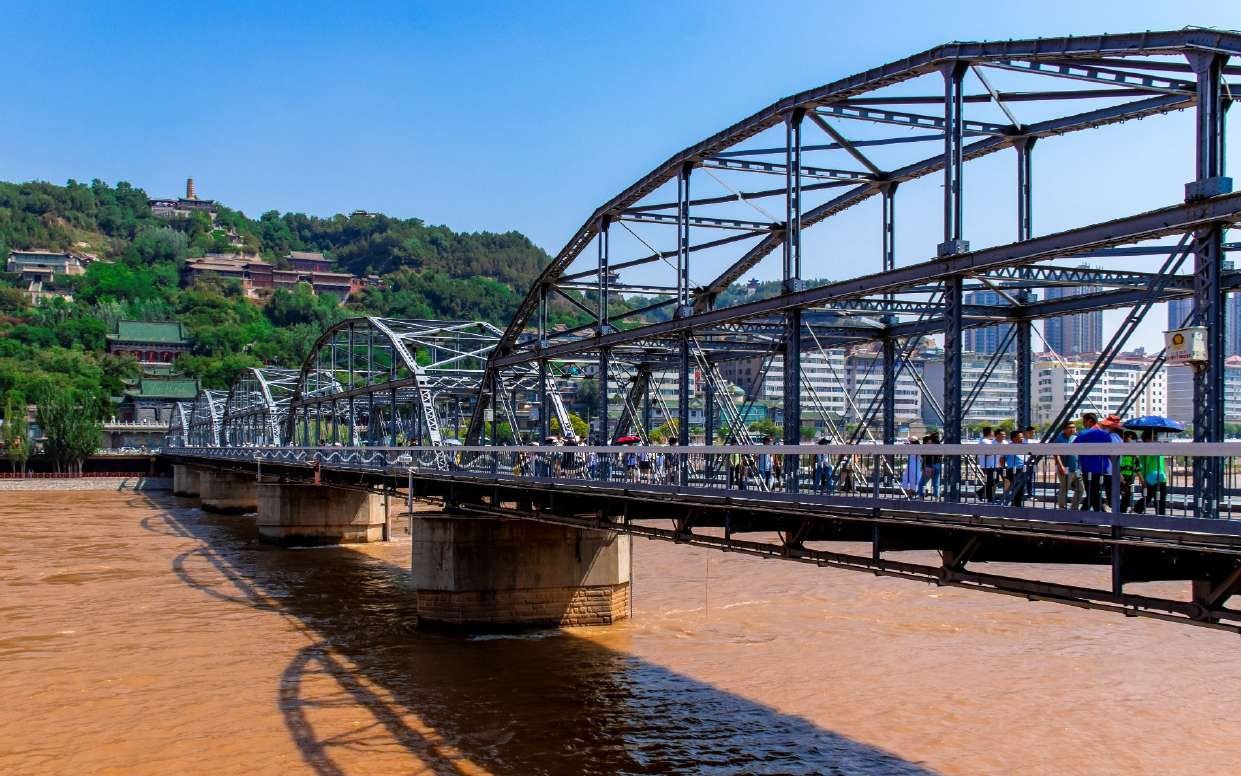
- Photo stop at Zhongshan Bridge, a steel truss bridge over the Yellow River built in 1907-1909, originally called the First Bridge and renamed in 1928 in honour of Sun Yat-sen.
- Photo stop at the Yellow River (Huanghe), China's second-longest river at about 5,464 km and the cradle of Chinese civilisation.
Drive to Wuwei, about 3 hours 30 minutes.
- Visit the Kumarajiva Temple (Jiumo Luoshi Temple), dating back to the Later Liang and linked to Kumarajiva, the monk who translated Buddhist scriptures into Chinese. Its 12-storey octagonal brick pagoda, about 33 m tall, is believed to hold his tongue relic.
Day 3Wuwei – Zhangye
Visit the Leitai Han Tomb, discovered by chance in 1969: an underground brick tomb of the late Eastern Han with a large bronze procession of chariots, horses and attendants. It is also where the Flying Horse of Gansu was found.
Arrive in Zhangye, founded under the Han in 111 BC, a caravan stop on the Silk Road mentioned in the travels of Marco Polo, who lived here for about a year. The city's name comes from a phrase in the Book of Han (汉书) about extending the empire's reach to the Western Regions.
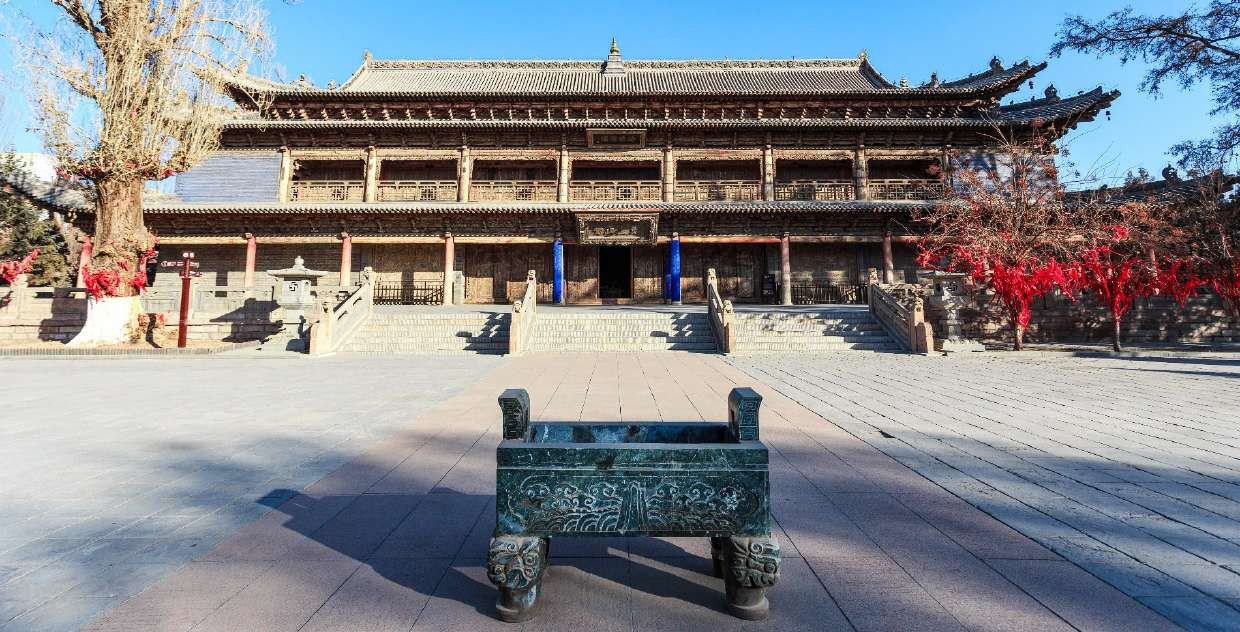
- Visit Dafo Temple (Great Buddha Temple), built under the Tangut Western Xia (1038-1227). Legend says a monk found the reclining Buddha here in 1098 and founded the temple.
- The 35-metre reclining Buddha is the largest clay reclining Buddha in China. Qing-dynasty murals tell the story of Xuanzang's journey from Journey to the West.
- In 1996 the temple was listed as a nationally important historical and cultural site.
Day 4Zhangye – Jiayuguan
Drive about 1 hour to the Zhangye National Geopark to see the Rainbow Mountains, a 5A-rated attraction listed as a UNESCO Global Geopark in 2020. The colours come from red sandstone and minerals laid down over millions of years, across an area of more than 410 square kilometres.
Drive to Jiayuguan, about 3 hours 30 minutes.
- Visit the Jiayuguan Great Wall Fort, a 5A-rated attraction built in 1372 in the early Ming dynasty. The trapezoid fort has a perimeter of 733 m, covers more than 33,500 square metres, and has 2 main gates and 4 gun towers.
- Known as the 'First and Greatest Pass Under Heaven', it was inscribed as a UNESCO World Heritage site in 1987.
Day 5Jiayuguan – Dunhuang
Drive to Dunhuang, about 4 hours 30 minutes. Founded under the Han in 121 BC after victory over the Xiongnu, its name means 'blazing beacon'. It was a crossroads of cultures, religions and ideas on the Silk Road.
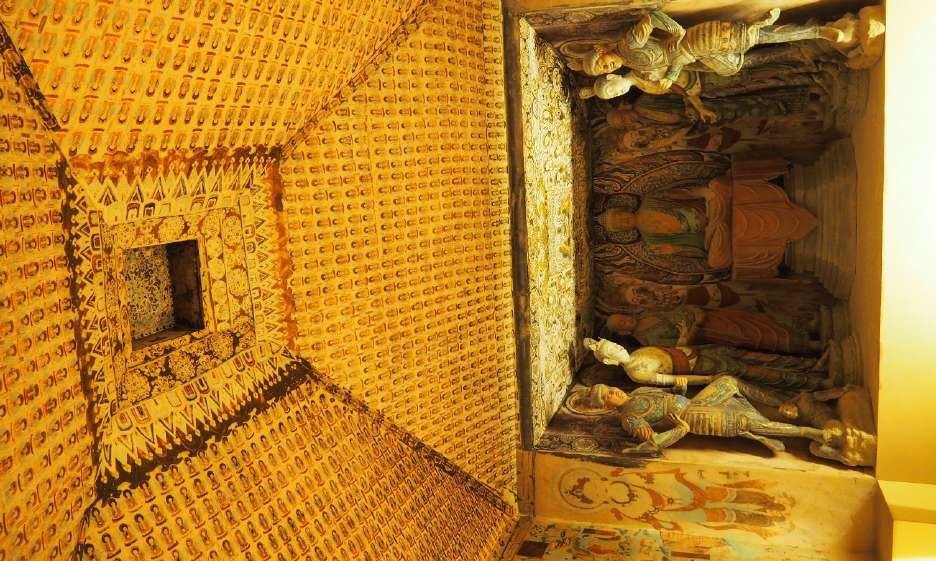
- Visit the Mogao Caves, the 'Caves of the Thousand Buddhas', among the most important and greatest sites of Buddhist art in the world. Carved into a cliff along the Daquan River, they include more than 492 preserved caves, over 45,000 square metres of murals and more than 2,000 painted sculptures.
- The caves were begun in 366 by the monk Le Zun after a vision of a thousand golden Buddhas, and were inscribed as a UNESCO World Heritage site in 1987.
- Watch the Ancient Sound of Dunhuang show, inspired by decoded ancient music scores from the Library Cave and the Mogao murals. The lead character is Bai Xin and the heart of the show is the pipa. Guests walk freely through open zones before the full stage performance.
Day 6Dunhuang
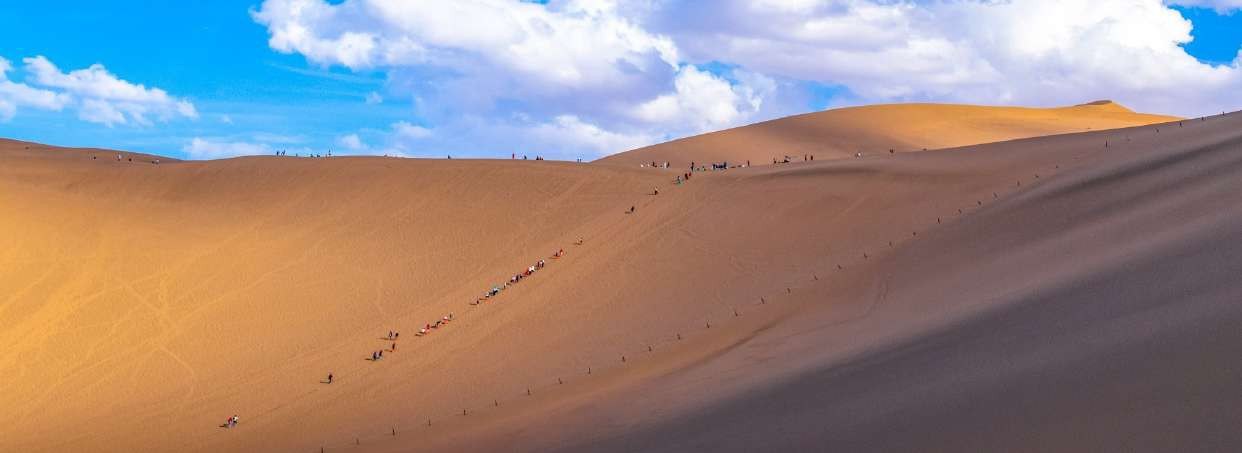
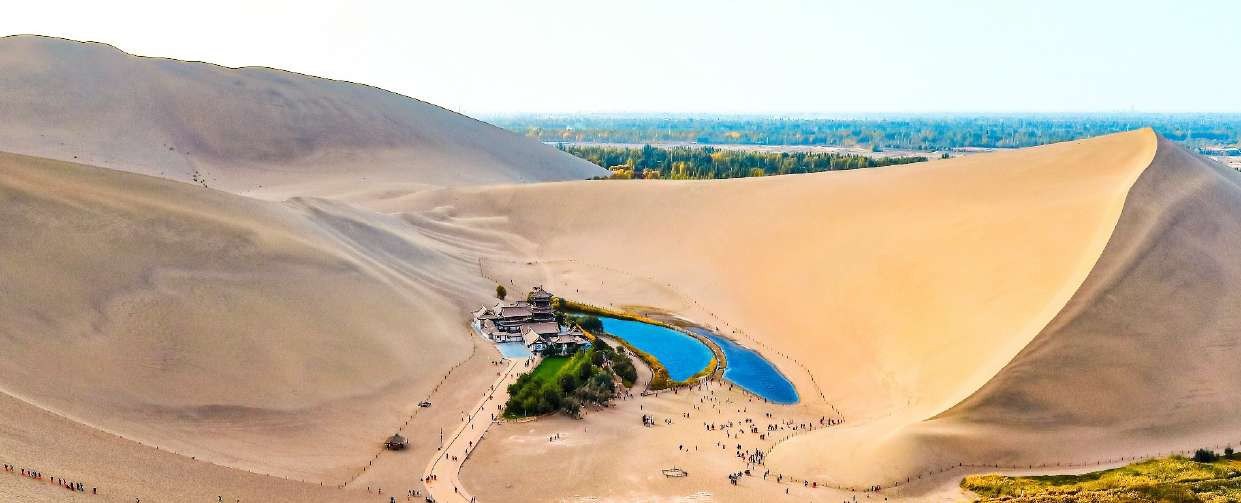
Drive about 30 minutes to Mingsha Shan, the Singing Sand Dunes, a 5A-rated attraction about 6 km south of Dunhuang. The dunes stretch more than 40 km and rise up to 250 m; their 'singing' comes from sand grains sliding and rubbing together.
- Visit Crescent Lake, the oasis among the dunes that sustained Silk Road caravans, nicknamed the 'First Spring in the Desert'.
- Camel ride on the dunes for about 40 minutes (fee included in the tour price).
- Visit the Dunhuang Museum, founded in 1979, with artefacts from the Neolithic to the Ming and Qing, especially the Han and Tang periods.
- Visit the Dunhuang Mosque, whose community dates back to the Ming dynasty.
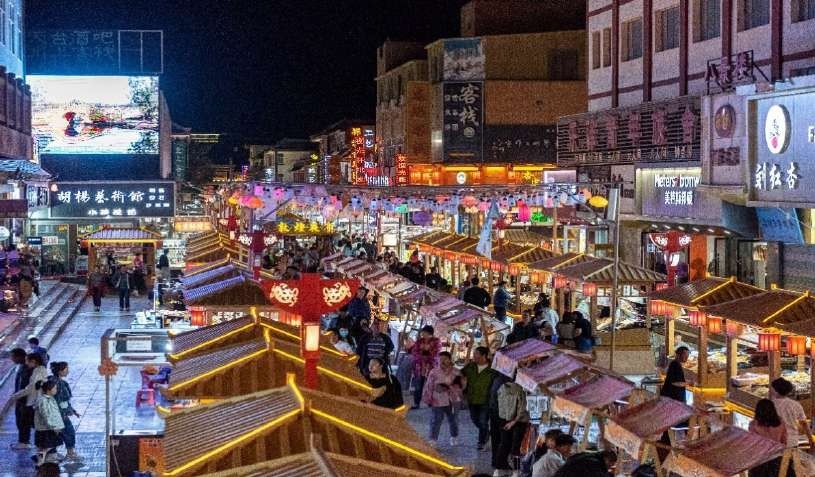
- Stroll the Dunhuang (Shazhou) Night Market.
*Dinner is at leisure, with a refund of 200 yuan.*
Day 7Dunhuang – Shanghai – Bangkok
Transfer from the hotel to Dunhuang Mogao International Airport (DNH).
- 10:30: check in with China Eastern Airlines.
- 13:15: fly to Shanghai on MU6760, about 3 hours 50 minutes (no meal on board).
- 17:05: arrive at Shanghai Pudong International Airport (PVG) for a stopover of about 4 hours 5 minutes (no dinner provided).
- 21:10: fly to Bangkok on MU547, about 4 hours 45 minutes (no meal on board).
Day 8Bangkok
00:55: arrive safely at Suvarnabhumi Airport (BKK), Thailand.
Included
- Round-trip international economy flights (Economy Class)
- Baggage allowance on international economy flights per airline standards, both checked and carry-on
- Transport and sightseeing with an experienced driver
- Accommodation as specified, two guests per room
- Entrance fees as specified in the program
- Meals as specified in the program
- Experienced local guide
- Thai lecturer and tour leader
- Travel accident insurance (subject to the policy terms)
Not included
- Business Class upgrade for international flights (from 37,000 baht per person)
- Single room supplement (if staying alone): 7,500 baht per person
- Personal expenses such as passport issuance, telephone, internet, laundry, minibar, special meals outside the program, extra drinks, passport fees, excess baggage, seat reservations, medical costs for pre-existing conditions, personal portable oxygen cans, and lost luggage or valuables
- Tips for the tour leader, local guide and driver (650 yuan per person for the whole trip)
- 7% VAT, 3% withholding tax and other legal taxes (if a tax invoice is requested)
- Fuel surcharges and airport taxes if the airline raises prices
About this tour
How much is the Silk Road tour and are flights included?
What deposit is required and when is the balance due?
What is the minimum group size?
What is the single supplement and what hotels are used?
How much are tips?
Who leads the tour and which cities does it visit?
Is it cold on the Silk Road in March and what should I pack?
Can I cancel the Silk Road tour?
China: Silk Road – Journey for the Scriptures
Interested? Message us on LINE — we reply fast