FILE Nº 0448 · History · DECLASSIFIED
Field Marshal Phibun and the Turning of the Chinese into Thais
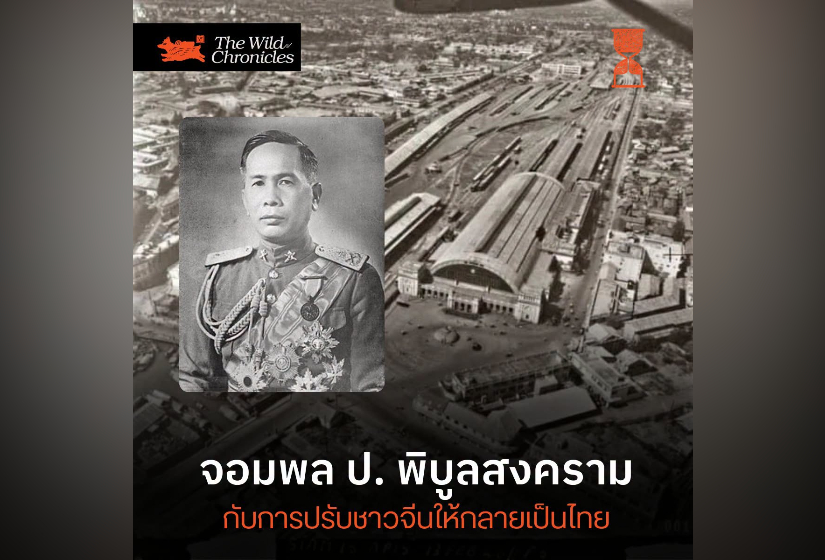
TL;DR — Siam and China had traded for centuries, but Chinese began settling in Thailand in large numbers in the late Qing dynasty.
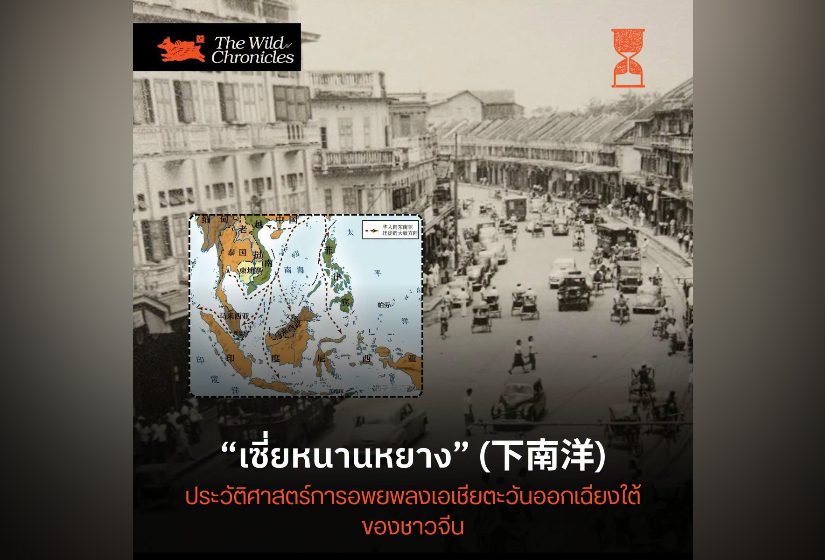
Looking back in history, Siam and China had traded for hundreds of years, but the period when Chinese began settling in Thailand in large numbers came in the late Qing dynasty, when their homeland faced famine, high prices and war. At the same time Siam was in the middle of building the Rattanakosin capital, so many poor Chinese came to do work that Thais would not do: labouring, or what was called being a coolie.
After several decades, the thrifty Chinese began to get on their feet and opened shops and restaurants, while Chinese tycoons who already had capital expanded into rice mills, the rice trade and sawmills, until the Chinese had by default come to control Thailand's economy, because most Thais did not do such work and Thai gentry preferred government service to owning businesses as is common today.
This began to breed suspicion among Siam's elite, until King Vajiravudh (Rama VI), writing under the pseudonym “Asvabahu”, wrote the article “The Jews of the East” in 1914.
The reason he compared the Chinese to Jews was that he saw the immigrant Chinese as behaving like the Jews of Europe: coming to make a living, growing rich, reaping profits and holding the country's economy, yet refusing to assimilate with the locals.
The Chinese of that era still regarded themselves as Chinese, not Thai. When they earned money they sent it back to their hometowns, caring more for their motherland than the land they lived in. This resentment became a major spark when the era of Field Marshal Plaek Phibunsongkhram arrived.
The government of the time pushed an extreme nationalist policy to create a “new Thai nation”, from changing the country's name from Siam to Thailand, to campaigns to wear hats, shoes and skirts, to quit chewing betel, to streamline the Thai language to be shorter and more concise, and even to move New Year's Day to 1 January so as to be seen as civilised in the eyes of the world.
But these nationalist policies did not stop at reshaping Thais' style; they became a “major turning point” that shook the way of life of Chinese across Thailand...
::: ::: ::: ::: ::: ::: :::
Field Marshal Phibun began to bring in the policy “Thai-made, Thai-used, Thai prosperity” in order to bring money back to circulate more in Thai hands, which in practice did not work very well...
.
( Still, it was fortunate that the Thai government of that era did not go to the extreme of seizing all Chinese businesses for the state, because in history several countries chose to do so and ended up wrecking their economies. More on that in the comments. )
Most important was the forced change of nationality and names, pressing Chinese who wanted to do business or wanted their children to enter government service to adopt Thai surnames. Original clan names were translated into long Thai surnames, and another striking measure was closing Chinese schools.
Phibun began measures to hamper Chinese schools from his first term as prime minister, and more clearly in his second.
Phibun saw that after the Communist Party succeeded in ruling China, Chinese schools of the time could become places that spread communist ideology. Together with the number of students in Chinese schools, which had shot up from over ten thousand to nearly two hundred thousand, the government felt it had to step in and control them seriously.
It started with a crackdown on Chinese schools that were not properly registered, rejecting all applications to open secondary schools, and pressing and ordering the closure of existing schools, from more than four hundred nationwide down to just over a hundred, leaving many dozens of provinces with almost no Chinese schools at all.
Besides closing schools, the government also assimilated the curriculum by requiring Chinese schools to have only Thai headmasters, cutting Chinese-language lessons to just a few hours a week, banning Chinese characters on the blackboard in other subjects, banning their use in explaining arithmetic, and banning teaching materials, including more than twenty-two prohibited Chinese-language books.
On top of that, schools that wanted subsidies had to agree to cut Chinese teaching hours as a condition. Most Chinese schools, already in poor financial shape, eventually closed on their own one after another.
The result was that Chinese schools became expensive. Chinese parents who did not want to bear the high fees had to send their children to Thai primary schools or Christian schools instead, and that became the biggest uprooting of Chinese-language education in Thai history.
Phibun's measures, together with later factors such as the arrival of Thai-language radio and television, the Cold War context that forced people to pick sides, the social and work necessity of relying on Thai, and intermarriage between Thais and Chinese, gradually moulded Chinese blood in Thailand until it was completely assimilated. In the end later generations of Chinese descendants saw themselves, and considered themselves, fully Thai, simply of Chinese ancestry.
#TWCHistory #TWCThailand TWC_Salmon
References :
ศันสนีย์ วีระศิลป์ชัย. (2569, 17 กุมภาพันธ์). จอมพล ป. เจ็บใจช่วงตรุษจีน เจ๊กขายหมู-ร้านขายกับข้าวปิดร้านหมด. ศิลปวัฒนธรรม.
ศิลปวัฒนธรรม. (2565, 7 สิงหาคม). การปิดโรงเรียนจีน และห้ามสอนภาษาจีน ในประเทศไทยสมัยรัฐบาลจอมพล. ศิลปวัฒนธรรม.
อัศวพาหุ. (2428, 7 มกราคม) พวกยิวแห่งบูรพทิศ และ เมืองไทยจงตื่นเถิด. หอสมุดแห่งชาติจังหวัดสุพรรณบุรี เฉลิมพระเกียรติ.
ชนิดา จรรโลงศิริชัย. (ม.ป.ป.) แปลก พิบูลสงคราม. ฐานข้อมูลการเมืองการปกครอง สถาบันพระปกเกล้า