FILE Nº 0456 · History · DECLASSIFIED
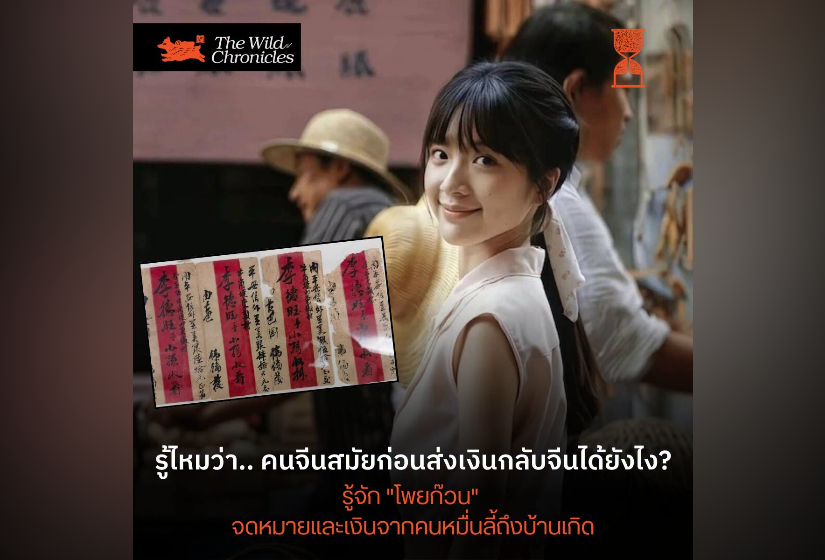
How Did Chinese Migrants Send Money Home? Poi Kuan: Letters and Money from Ten Thousand Miles Away
TL;DR — To my Thai-Chinese friends: have you ever heard stories about your grandfather when he was young?
To my Thai-Chinese friends: have you ever heard stories about your grandfather when he was young?
The stories of Chinese who migrated to Thailand are almost all stories of struggle..
They had to work as coolie porters in factories. Part of what they earned went to survive, part was saved, and part was sent back to China.
Have you ever wondered how Thai money was sent back to China back then?
Did they just put Thai money in an envelope? Wasn’t it stolen along the way? How did Chinese in Thailand send money to their hometowns?
The answer is that they sent money home through something called “Poi Kuan” (โพยก๊วน)..
::: ::: ::: ::: ::: ::: ::: ::: ::: ::: ::: ::: ::: :::
It was not only the Chinese in Thailand but overseas Chinese everywhere who sent money back to China through this innovation called “Poi Kuan”.
The word “Poi” means a letter or document that must be sent together with the money (if there is only one of the two, it is not called a poi), while “Kuan” means an office or place.
Put together, “Poi Kuan” means a place or institution that handled letters sent along with money, which overseas Chinese sent back to relatives in China.
::: ::: ::: ::: ::: ::: ::: ::: ::: ::: ::: ::: ::: :::
The Poi Kuan method of sending money followed some simple steps..
1. An overseas Chinese would walk into a Poi Kuan shop and hand Thai baht to the owner, together with a letter written on compact, finely textured thin paper. It was written with a Chinese brush in short, concise words, telling the news of life as much as necessary, and stating the relative’s name, the village address in China, and the amount of money to be received.
(Choosing a Poi Kuan was a serious matter. It had to be a shop that was truly reliable and trustworthy, because sending money in those days did not go through the official banking system as it does today, but relied mainly on mutual trust.)
2. The Poi Kuan owner in Thailand would take the baht collected from many people and buy Thai goods such as rice, teak or rubber, then ship them to be sold in China.
3. When the cargo ship reached the Poi Kuan branch at the destination in China (mostly in Hong Kong, Chaozhou or Shantou), they would sell the goods such as rice and convert the proceeds into local yuan.
4. The poi courier, respectfully known as “Pung Poi Pae” (ปุงโพยแปะ, the uncle who delivers the poi), would carry the letter and the yuan on foot deep into the villages to the relative’s front door, hand over the money, get a signature, and read the letter aloud for them.
5. Once the relative in China had received the money, they had to write a reply letter called “Hoi Poi” (回批) confirming that the full amount had been received. The Pung Poi Pae would then carry this reply letter back across rivers and seas to return it to the sender in Thailand, giving them peace of mind!
::: ::: ::: ::: ::: ::: ::: ::: ::: ::: ::: ::: ::: :::
Poi Kuan, which began in the late Qing dynasty, gradually came to an end in Thailand after Thailand and China established official diplomatic relations in 1975, along with the arrival of modern commercial banks that were easy and safe, and an international postal system that was faster and more convenient.
With the opening of the country, descendants could also travel back to visit relatives in China themselves. The Poi Kuan system gradually ended and finally became just a story and a piece of history in people’s memories.
And if you have read this far and want to feel the love and bonds carried in these envelopes of memory more clearly..
Did you know that the film “Dear You (จดหมายรักถึงอาม่า)” uses the story of “Poi Kuan” as its main theme!
The film tells the story of a young man who travels to Thailand to search for his grandfather, from whom he was separated long ago, but along the way he discovers a secret that has been hidden for a long time..
I can tell you the story is moving and touching, and captures the life of grandpas and grandmas, and Thailand in the old days, with great charm. It is a perfect chance to take your dad, mum or the elders at home to remember together in the cinema. I promise they will be moved and get caught up in the story!
“Dear You (จดหมายรักถึงอาม่า)” 📌 in cinemas 6 August
Most importantly!! Next year, The Wild Chronicles will be running a Shantou-Chaozhou tour in China, in March or April 2027!
This will be a relaxed tour with a chilled-out program, suitable for all ages and especially for older travellers.
If you are interested, message our Line OA and type “Interested in the Shantou tour” to receive the tour program in advance.
::: ::: ::: ::: ::: ::: ::: ::: ::: ::: ::: ::: ::: :::
#TWCHistory #TWCChina TWC_Salmon
References:
โพยก๊วน: ระบบการเงินของชาวจีนโพ้นทะเล – Facebook Page : สาขาวิชาประวัติศาสตร์ท้องถิ่น คณะโบราณคดี มหาวิทยาลัยศิลปากร.
“โพยก๊วน” เงินออมหลายร้อยล้านที่จีนโพ้นทะเลส่งกลับบ้านเกิด – ศิลปวัฒนธรรม.