FILE Nº 0534 · History · DECLASSIFIED
Mongols in the Land of the Dragon: The Decline of an Ethnic Group Amid China's Centralization
TL;DR — When people mention "the Mongols", many think of Genghis Khan's mighty empire, which once ruled half the continent.
When people mention "the Mongols", many think of Genghis Khan's mighty empire, which once ruled half the continent. But in another corner of the world, the Mongols living in China, in the Inner Mongolia Autonomous Region, are facing a tide of assimilation that is slowly taking their identity away bit by bit.
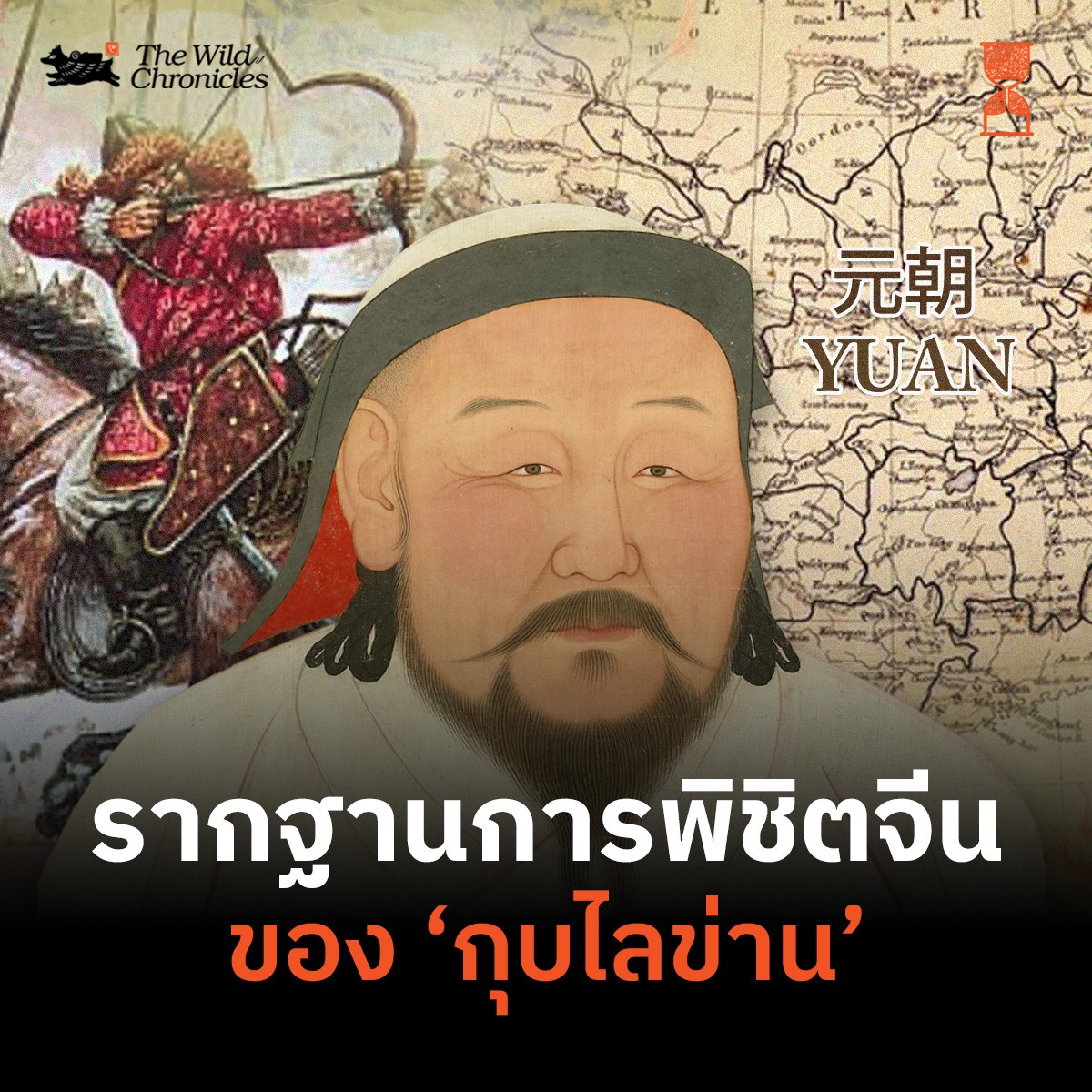
In the past, Inner Mongolia was the land of the Mongols, but when the Yuan dynasty, the Chinese dynasty the Mongols founded, collapsed in 1368, Mongol power gradually diminished.
In the Qing era (1644-1911), Mongol tribes settled in the southeast and interacted with the Han Chinese and Manchus there, becoming what is called "Inner Mongolia".
The Mongols in this region kept certain rights, such as self-rule through a system of banner nobility, but in reality they were increasingly bound by rules and authority from the capital. This was especially so in the late Qing period, when a policy of "opening the land" let Han Chinese settle there to strengthen the frontier and develop the economy.
But after the founding of the People's Republic of China in 1949, the central government pursued an intensive policy of "frontier development", encouraging large numbers of Han Chinese to migrate into Inner Mongolia for economic and security goals and to merge ethnic groups into one.
The result was a drastic demographic change. A land that had been home to the Mongols since ancient times became a land where the Mongols are a minority of only 17% of the population, while the Han are the majority.
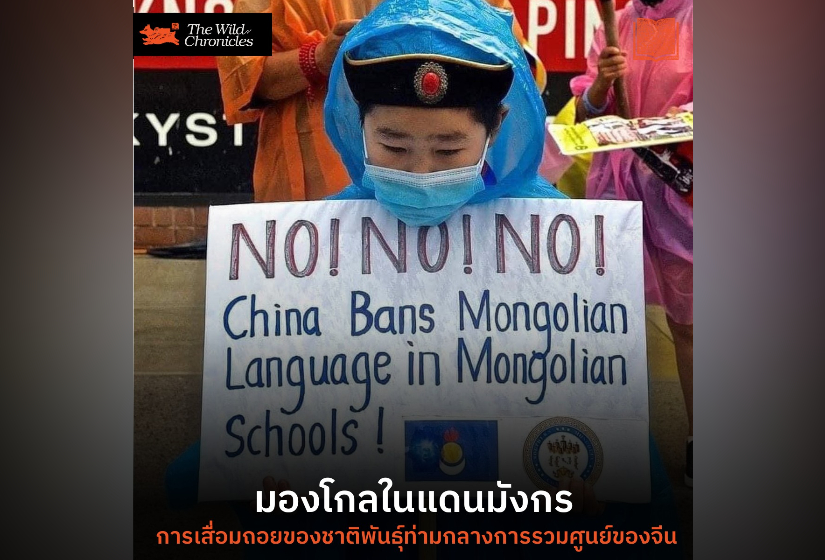
In 2020, Inner Mongolia's education authorities announced a major policy change: replacing the Mongolian language, traditionally used in teaching, with Mandarin Chinese for core subjects such as language and literature, ethics and law, and history.
The policy provoked resistance from many Mongols, who saw it as "destroying their identity" and "erasing their culture". Large protests broke out across Inner Mongolia but were tightly controlled by state officials. Many families refused to send their children to school, and arrests of people involved in the movement were reported.
Another dimension of the change is the shift from a nomadic society to an industrial one, because the Chinese government has intensively promoted mining, agriculture and permanent settlement in Inner Mongolia, affecting the grasslands that were once the grazing land of the Mongol tribes.
The nomadic way of life, once the taproot of Mongol identity, has been replaced by migration into cities. Some people were forced to relocate in the name of "environmental protection" or "economic development", but the consequences were being cut off from their communities, having no income, and social vulnerability.
In an era when China is determined to build a single national identity, ethnic expression, especially expression that differs from the state's framework, is seen as a threat to security. Mongol activists who call for preserving their language, culture or land rights are detained and closely watched.
Many international organizations and human rights advocates have expressed concern about the situation, pointing out that it follows the same pattern as what has happened in Tibet and Xinjiang.
The decline of the Mongols in China is not just a matter of population statistics. It is a matter of identity being systematically erased, through the state's centralizing policies, the use of the official language as a tool to control consciousness, and economic change out of step with cultural roots.
While the sky above the grasslands remains wide open, some Mongols still dream of a world in which their voices can once again be heard clearly in their own home...
#TWCVariety #TWCChina #TWCMongolia #TWC_Rama