FILE Nº 0369 · History · DECLASSIFIED
The Battle of Taierzhuang: China's Stalingrad, "Retreat = Death", and Its First Victory over Japan
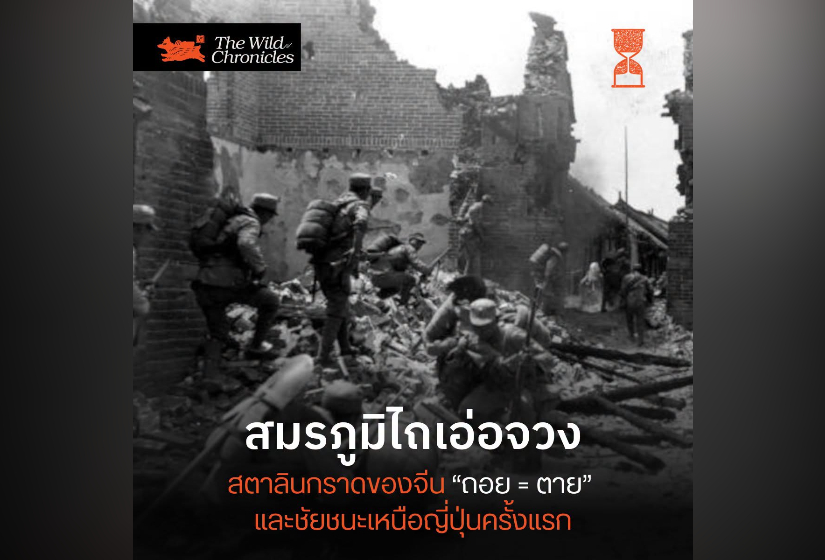
TL;DR — The Battle of Taierzhuang opened on 15 March 1938, when Japanese forces pursuing the Chinese army from the Shanghai-Nanjing front clashed near the city.
1. The Battle of Taierzhuang opened on 15 March 1938. The Japanese army, which had pursued the Chinese army from the Shanghai-Nanjing front, began clashing near the city of Taierzhuang. The Japanese had support from aircraft, tanks and artillery, which let them break through the Chinese lines and force them to keep falling back until they succeeded in reaching the city itself.
2. But once the Japanese had to fight inside the city, with Taierzhuang's narrow alleys, every street, every lane and every building corner became an excellent defensive position for the Chinese.
3. Japan's modern equipment, such as tanks and artillery, became almost meaningless in such confined space, and forced both sides to fight at close quarters. It can be said that this was one of the longest and bloodiest close-quarters battles in the history of war.
"The fighting went on continuously day and night. Flames shot up until the sky was bright. Often the only thing between our forces and the enemy was a single wall. Soldiers drilled holes in the bricks and mortar to shoot at each other secretly. We fought over a single building for several days, and it cost dozens of lives."
4. The fighting conditions at Taierzhuang were so brutal that they were hardly different from the Battle of Stalingrad that we know well.
.
Of 57 Chinese soldiers ordered to defend a building, only 10 survived.
5. The whole city was wrecked by frenzied artillery bombardment. Meanwhile the Chinese leaders took drastic measures, ordering junior soldiers never to retreat, and if front-line troops were wounded or killed, the officers had to step in and lead the fight from that position immediately.
.
"Anyone who fails in their duty will be executed for betraying the nation."
6. It was so ruthless that when tanks entered the city, Chinese soldiers gave their lives as suicide bombers, strapping grenades around their bodies and running at the Japanese tanks to destroy them. Even when the Japanese army began to use tear gas in the battle, it did not make the Chinese soldiers fall back.
7. Japan had to commit enormous force to take this city, yet the best it could do was seize only two-thirds of Taierzhuang, and that was the key turning point that completely reversed the course of the war.
________________________________
8. Having bought time to gain the advantage, fresh Chinese forces finally came in as reinforcements. They began to encircle the Japanese army in Taierzhuang from the sides and rear, in line with a battle plan previously discussed with German military advisers.
9. The big Chinese counterattack opened with air support from about 30 Soviet warplanes that bombed the Japanese camps, together with the march of General Tang Enbo, who led the 20th Army to cut the main railway line.
10. The advance from both north and south left the Japanese army completely surrounded and totally cut off from its supply lines. Although Japan tried to send units to break the encirclement, they were blocked by the Chinese and forced to fall back into the encirclement together.
11. By 5 April the Japanese troops were surrounded by a total of more than 11 Chinese divisions. The key factor in Japan's eventual defeat was a critical shortage of supplies: ammunition, fuel, food and drinking water ran out completely. The Japanese soldiers had to fight exhausted and severely dehydrated through a battle lasting more than a week.
12. The once fearsome tanks sat still for lack of fuel, and the artillery was worthless without shells. Although Japan tried to send supplies by air, most of the packages bitterly fell into Chinese hands, until in the end the Japanese soldiers could only rush in with bayonets.
13. The Chinese, on the other hand, seeing victory before them, dared to throw their full force in, using Soviet tanks to crush and mercilessly kill wounded Japanese soldiers, until the Japanese line collapsed completely.
.
On 7 April only 2,000 Japanese soldiers managed to break out and escape, leaving behind the bodies of thousands of comrades.
14. Although the Chinese army won this battle, it came at an enormous cost to both sides. Western historians estimate that Chinese casualties, killed and wounded, were as high as 20,000 to 30,000.
15. As for Japanese losses, modern Western scholars estimate about 8,000 dead and over 12,000 wounded. However, contemporary Western records put the number of Japanese soldiers who died in this battle as high as 16,000 to 20,000.
16. This defeat shook the Japanese army severely, because it was the first major defeat since the war began, and it destroyed the myth of the invincibility of the Imperial Japanese Army.
17. On the other hand, the victory became an excellent propaganda tool for Chiang Kai-shek's Chinese government to raise the morale of both soldiers and the public. General Li Zongren even praised the victory at Taierzhuang as a "symbol of national revival", while General Feng Yuxiang wrote an article in the Ta Kung Pao newspaper comparing the Japanese soldiers trapped in the city to "a turtle in a jar" waiting to be smashed.
#TWCHistory #TWCChina #TWC_Salmon