FILE Nº 0636 · History · DECLASSIFIED
The Bangladesh War of Independence: Dawn of Bengal
TL;DR — A few months ago I wrote about Operation Searchlight. Here is a short recap, and then the war that followed.
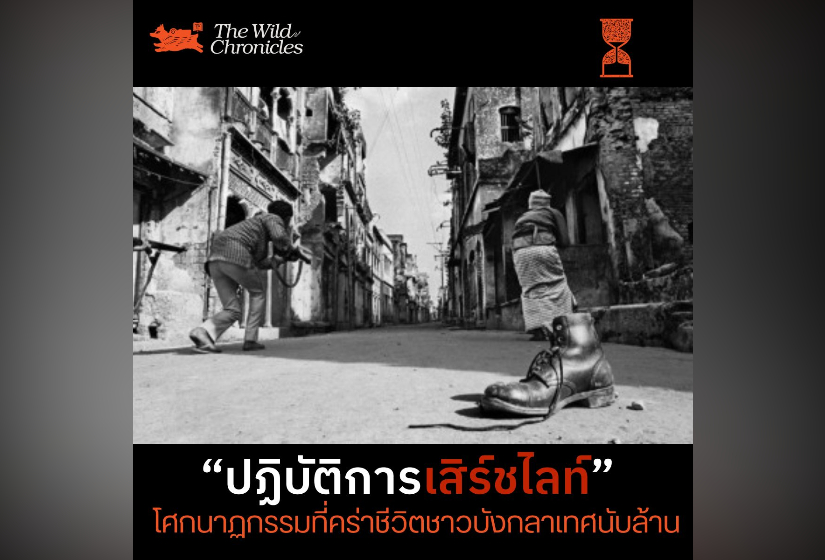
A few months ago I wrote an article about "Operation Searchlight." Let me briefly recap.
In East Pakistan at the time (present-day Bangladesh), protests broke out because West Pakistan tried to ban Bengalis from using their language and to erase their identity. The conflict escalated into a brutal crackdown by West Pakistan.
In "Operation Searchlight," West Pakistani troops began a cruel slaughter of Bengalis. Thousands were killed, and tens of millions of people had to flee the war.
Yet the flame of the Bengali struggle did not die out as they had hoped. The more people they killed, the more people were filled with hatred.
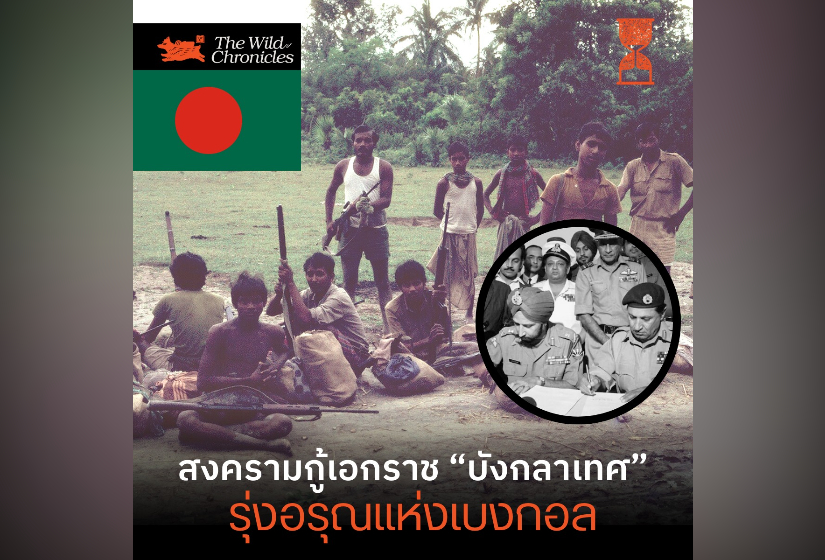
The "Mukti Bahini," or Bangladesh Liberation Army, became a thorn in West Pakistan's side. They popped up to attack Pakistani troops guerrilla-style, cut supply routes, blew up bridges and vanished, until the Pakistani government was almost mad with rage. It also knew the truth that these guerrillas were not fighting alone but were backed by "India"!
As long as India kept supporting the rebels, the Pakistani army would not win this war easily. Fearing that India would join the conflict, Pakistan seized the initiative and attacked India first, striking Indian air bases in several cities at once.
This attack lit the fuse for the full-scale outbreak of the "Third Indo-Pakistani War," which overlapped exactly with the "Bangladesh War of Independence" already under way.
How would this war turn out!?
Follow along with me.
::: ::: ::: ::: ::: ::: ::: ::: :::
– West Pakistan fails
1. On the evening of 3 December 1971, the Pakistan Air Force decided to go all in with "Operation Chengiz Khan," sending squadrons of fighters to bomb 11 Indian air bases and radar stations along the western front at once. It hoped to finish off and pull India's fangs before it could get ready, imitating Israel's tactics in the Six-Day War. However...
2. The operation failed miserably, because India was already on guard and had moved its fighter aircraft into concrete bunkers. Indian damage was only slight.
When the operation was over, the political consequences for India were enormous, because it had been attacked first. This allowed India to claim legitimacy in striking back at Pakistan.
Indira Gandhi, India's iron-willed female prime minister, declared that Pakistan's action was a direct declaration of war on India. She ordered full mobilization to respond at once on both the western and eastern fronts.
3. On the western front India advanced quickly, and even more so on the eastern front. India judged that liberating Bangladesh would be better than merely attacking Pakistan, so it seized this golden moment to throw all its strength into "crushing" the Pakistani army in the east, hoping to eliminate the threat from its rival on the eastern side for good.
The Indian army moved in to join the Mukti Bahini in full force, giving it an enormous advantage over the Pakistani army in the eastern region.
::: ::: ::: ::: ::: ::: ::: ::: :::
– The 1971 Indo-Pakistani War and the Bangladesh Liberation War
4. In the operation to liberate East Pakistan, India committed 3 brigades to the battlefield, coordinating with nearly 3 divisions of Mukti Bahini forces, plus a large number of unorganized local guerrilla groups. The force that the Indians and Bengalis had was incomparably greater than the Pakistani army's mere 3 divisions.
The Indian army advanced and seized territory quickly, using Blitzkrieg tactics. They chose to "bypass" the densely defended Pakistani border fortresses and aimed instead at seizing key strategic points and heading for the heart of the capital, Dhaka.
The Pakistanis could not resist at all, because most of their forces had already been spread out guarding the border against guerrillas. When the Indian army succeeded in encircling Dhaka (or Dacca, as it was then), India's Major General Jacob gave the Pakistani commander an ultimatum, allowing only "30 minutes" to decide whether to surrender or be crushed by a massive air attack. In the end Pakistan chose to surrender.
5. In the air war, the Indian Air Force launched repeated attacks on East Pakistan until the air units there could not take off to respond at all. As a result, within just one week the entire airspace of East Pakistan was completely dominated by Indian fighter squadrons.
6. Not only that, the Indian Navy moved in to blockade and attack East Pakistan's important ports until they were utterly devastated. This left the Pakistani army in the east cornered, cut off from the outside world and completely besieged by land, sea and air.
7. Unable to hold the capital Dhaka, the Pakistani army finally had to sign an unconditional instrument of surrender on 16 December 1971. The full-scale fighting lasted only 13 days. It was one of the shortest wars in history, yet it brought about one of the greatest changes in the world.
8. The surrender made more than 93,000 Pakistani soldiers prisoners of war, the largest capture of prisoners of war since the end of World War II.
The tragedy that began with Operation Searchlight ended in victory for the Bengalis, and in the birth of a new independent state called "Bangladesh"...
(CIA estimates say India lost more than 3,500 soldiers while Pakistan lost about 5,000, with tens of thousands wounded on both sides. However, another source gives even heavier figures, and for the "Mukti Bahini," the Bengali liberation fighters, it is estimated that more than 30,000 lost their lives in this fight for independence.)
::: ::: ::: ::: ::: ::: ::: ::: :::
– The diplomatic battlefield
9. The battlefield war had ended, but the clash on the diplomatic stage was only beginning, when Bangladesh applied for membership of the United Nations (UN). Although most countries agreed, the attempt was halted by a veto from "China" (under Chairman Mao Zedong), Pakistan's main ally. The "United States," which at that time chose to side with Pakistan, also became one of the last countries to recognize Bangladesh's statehood, amid an intense Cold War atmosphere.
10. To make the transition go smoothly, in 1972 India and Pakistan signed the "Simla Agreement," a major turning point. Its main condition was that Pakistan would formally recognize Bangladesh's independence, in exchange for India returning all the prisoners of war.
India treated the more than 93,000 prisoners of war strictly according to the Geneva Conventions and released all of the soldiers within just 5 months. India also pardoned nearly 200 Pakistani soldiers whom the Bengalis had accused of being war criminals.
(This is not very related to Bangladesh, but I want to add that under this agreement India also returned to Pakistan more than 13,000 square kilometers of territory in West Pakistan that it had captured, though it kept some strategic points such as "Kargil," which later became the flashpoint of the 1999 war.)
11. Once Pakistan announced its recognition of Bangladesh's independence, the "country of Bangladesh" was finally officially accepted and joined the United Nations as a member.
::: ::: ::: ::: ::: ::: ::: ::: :::
– Joy Bangla!
12. Not long after independence was declared, in 1972, Sheikh Mujibur Rahman, the founding father of Bangladesh, was released from prison in West Pakistan and returned home like a hero. He took office as the first prime minister of Bangladesh, amid the ruins of war and the daunting task of rebuilding a battered country.
His first task was to draft a constitution based on equality, no matter what religion people follow or what language they speak...
13. Though decades have passed, the people of Bangladesh have never forgotten the lessons and the price paid for the word "independence."
They built the "Liberation War Museum" in Dhaka to gather historical evidence and record the atrocities that took place and the independence of Bangladesh bought with Bengali blood, a reminder for later generations to appreciate the value of the freedom their forebears gave them.
In addition, every 16 December is marked as "Victory Day." The whole country is decorated with green and red flags to honor the spirits of the millions who sacrificed their lives.
"Joy Bangla!" (Victory to Bengal!)
#TWCHistory #TWCBangladesh #TWCIndia #TWCPakistan #TWC_Salmon