FILE Nº 0236 · History · DECLASSIFIED
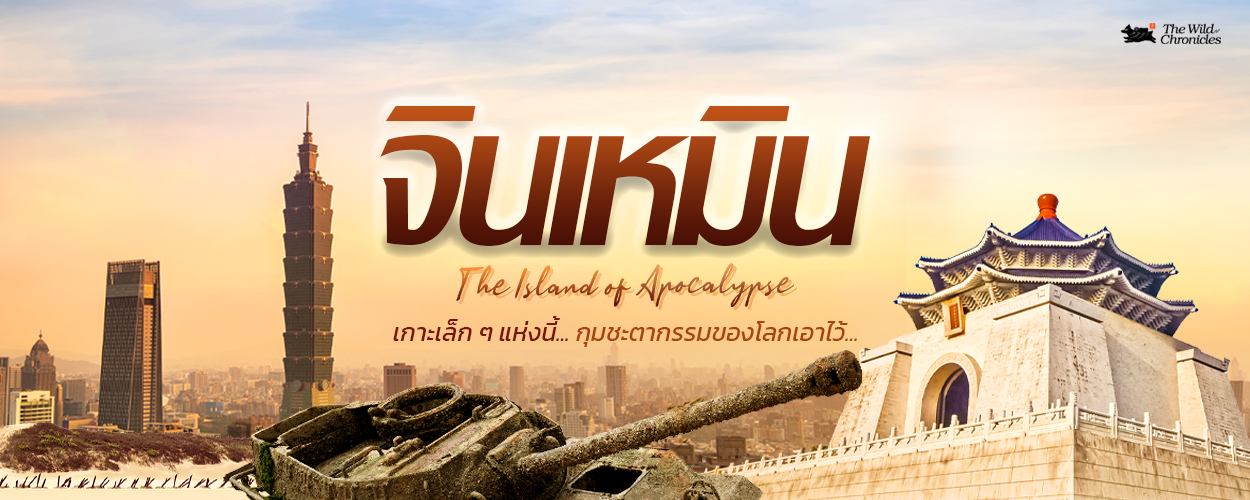
Chinese or Not? Taiwan's Search for Identity and Its Future
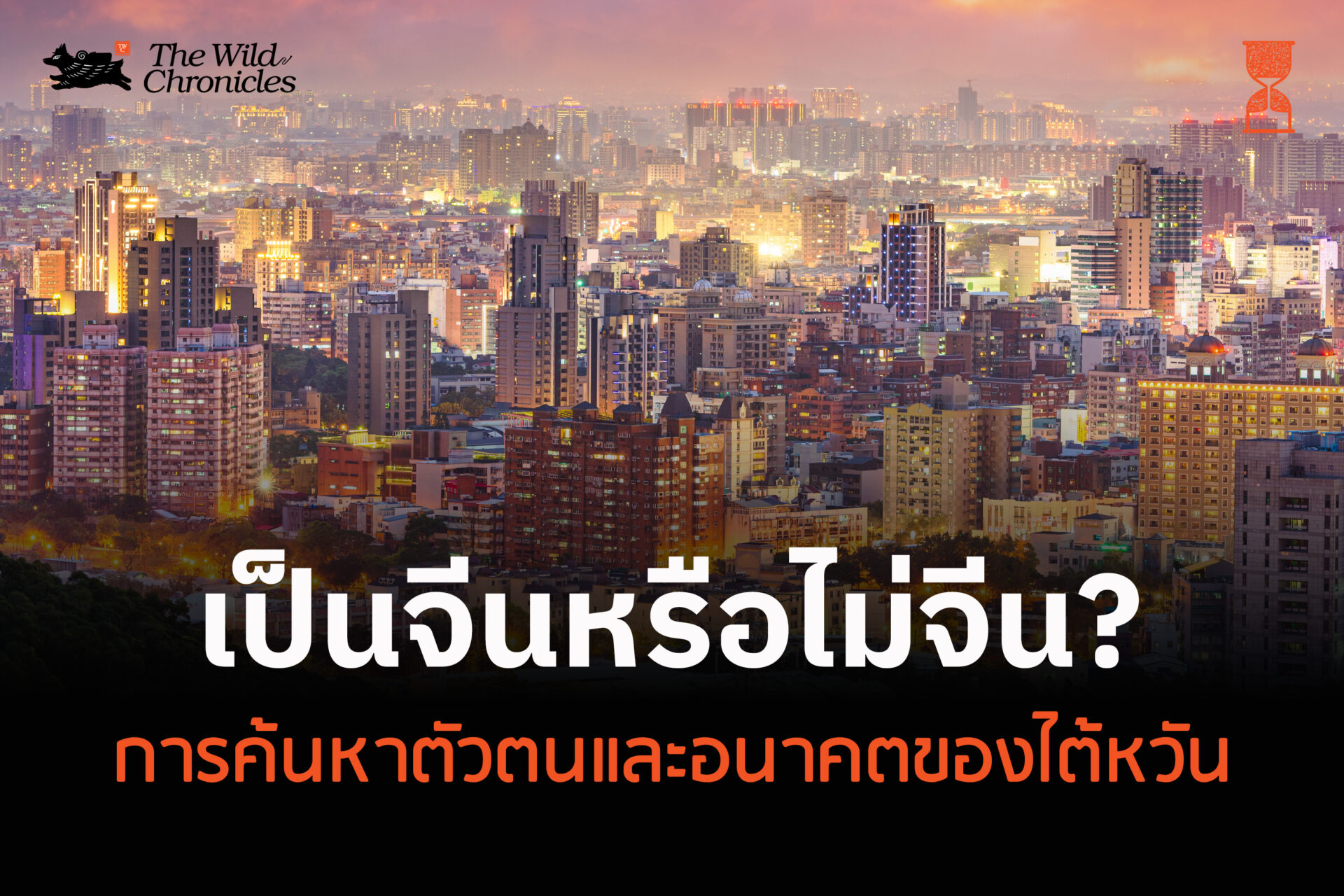
TL;DR — As Taiwanese people grow cool on the One China idea, will Taiwan's future still see itself as Chinese?
Contents
"I believe we do not need to declare independence, because Taiwan is already an independent state in its own right."
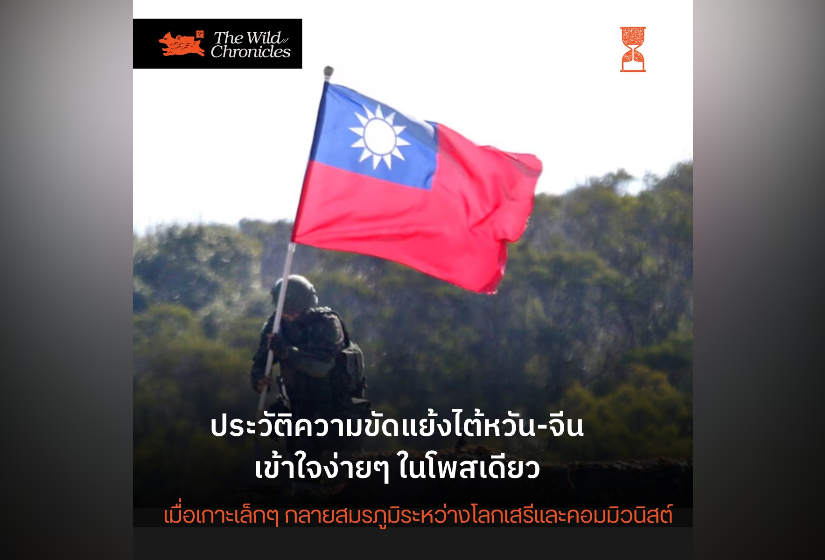
This is one of President Tsai Ing-wen's simple but forceful interviews with a BBC reporter after winning her second term, showing a firm resolve to preserve the independence of the Republic of China, or Taiwan, from the influence of the Communist Party, which has issued an ultimatum that Taiwan must reunite with the mainland by 2049 or risk facing a military invasion.
...Of course, this is not the first diplomatic pressure to occur, after Taiwan lost its seat at the United Nations in 1979 and reluctantly accepted the "1992 Consensus"...
Today this has become the question... is Taiwan part of China? And how can this small territory deal with a national status that other countries have refused?
To answer these questions, The Wild Chronicles will take you back through more than 72 years of nation-building, beginning with its time as a colony of the Dutch, imperial China and Japan, and including the threat of the Communist Party and the oppressive rule of the Kuomintang dictatorship for more than 42 years (1945-1987), until the transition to democracy under pressure from the mainland, which pushed Taiwan to develop itself to be accepted in global society.
Note that this article is the third part of the "History of Taiwan" series. If any reader wants to learn about the origins and key periods of Taiwan, you can follow Part 1, "The Birth of Taiwan," and Part 2, "The White Terror."
The Beginning
After countless defeats in the fight against the Communists, Generalissimo Chiang Kai-shek realized he should evacuate his remaining forces across the strait to the islands beyond it, choosing Taiwan as the main base to gather strength and wait for the time to march back to the mainland. The island had the necessary infrastructure, such as power plants, dams, railway stations, farmland and two large commercial ports, "Kaohsiung" and "Keelung," which had been built by the Japanese, even though these places were damaged by Allied attacks late in the war.
In addition, many local Taiwanese had received compulsory education, both general and vocational, including specialist professions such as doctors, lawyers and engineers. Together with 1.5 million intellectuals, business owners and wealthy people who fled the fires of war on the mainland, this gave Taiwan a large pool of highly skilled labor for building the nation.
Development in the Shadow of Dictatorship
However, the Kuomintang saw that the fastest and most advanced way to develop the country was to declare martial law to control the situation in the country and take control of basic necessities, handing power to closely connected business groups to rebuild infrastructure and develop the country's industry. Its key supporter was the United States, which gave economic aid worth around 10 percent of GDP at the time and gave it a seat on the United Nations Security Council (UNSC), a guarantee of the existence of the "Republic of China" before the world community.
At the same time there was an effort to instill the philosophy of the Three Principles of the People of Dr. Sun Yat-sen, made up of nationalism, the principle of giving the people the right to rule, and the principle of creating a good livelihood for the people. This was an attempt to create mainland values for the people of Taiwan, who had earlier been influenced by Japanese culture (and that idea became the basis of a popular common sense that later turned back on the government!)
Although this development plan is acknowledged as having made an important contribution to laying the country's foundations... it also showed that Chiang Kai-shek's government "wanted to make Taiwan a territory under the rule of the Republic of China, rather than accept Taiwan as a country with its own cultural roots."
US Policy Toward Taiwan
At first the US was the main supporter in defending the island of Taiwan under the Sino-American Mutual Defense Treaty of 1954. The US also gave financial support and backed its status at the United Nations.
But when the Soviet Union split with China, the Cold War situation changed. The US seized the opportunity to turn toward befriending mainland China in 1960, as President Richard Nixon secretly sent his security adviser Henry Kissinger and a delegation to visit the government in Beijing.
When the Taiwanese government began to realize it was being undermined by the US policy of befriending China to contain the Soviets, it tried to develop its domestic industrial capacity, which had previously been good only at making low-quality goods, so that it could stand strong. Taiwan succeeded in improving the production of export goods to compete in the international market in just 5 years (1960-1965), attracting a great deal of investment.
Even so, Taiwan's nightmare came true when the United Nations turned to accept the People's Republic of China as a member, before President Richard Nixon traveled to pay respects to Chairman Mao Zedong on 12 February 1972 to push "cross-camp diplomacy." As a result other Free World member states turned to establish official relations with the mainland, while European countries saw that having China to balance the Soviet Union, the regional threat, was more useful than protecting Taiwan, which was far from them, and so gradually cut diplomatic relations with Taiwan too.
....In the end, more than two thirds of United Nations member states voted to pass UN General Assembly Resolution 2758, officially annulling the status of the "Republic of China" as Taiwan's seat as a UN member in 1979...
Change from Within
With no great patron to sustain its interests, Taiwan's dictatorial government tried to review its internal administration, to reduce public discontent by turning back to developing transport and agriculture. It assigned Chiang Kai-shek's son Chiang Ching-kuo, a graduate of the Soviet Union with an active socialist-style approach to social reform, to take the reins of the large projects.
After Chiang Kai-shek died in 1975, President Chiang Ching-kuo tried to ease the harshness of the dictatorship, which had been aimed at waging war with China, and turned it toward economic development to build Taiwan's bargaining power on the international stage.
He decided to announce the end of martial law in Taiwan in 1987, marking the end of an era of fear under dictatorial power that had dominated Taiwan for 38 years.
The Taiwan Miracle
After martial law was lifted, the Taiwanese government tried to push the private sector to take the lead in establishing a position on the world stage, by approaching "Morris Chang," a Taiwanese-American businessman with experience in large US companies, to build the semiconductor industry, a new business with few players, where Taiwan had a large number of skilled workers at prices manufacturers were happy with.
They founded TSMC, the Taiwan Semiconductor Manufacturing Company, to make these products for leading foreign companies, and injected huge wages, announcing recruitment of employees from top universities abroad, so that a number of Taiwanese decided to return to work in the country.
This quick and clever policy change made the domestic economy leap forward rapidly, growing by an average of 7.5 percent a year, and Taiwan became a major semiconductor producer for the world ever after, known as one of the four "Asian Tigers," along with South Korea, Singapore and Hong Kong, to this day.
The One China Principle
But then a new monsoon crashed down on Taiwan once more, when the Beijing government used its advantage in the "1992 Consensus" (which was accepted by all members of the UN Security Council (UNSC) along with more than 100 other member states) to claim the right of China to block Taiwan's foreign trade.
You could say the period when Taiwan grew was the same period when mainland China grew far beyond it, and some Taiwanese businesses still had to depend on the mainland... so the Taiwanese government of the time had to struggle to keep the country afloat through the storm.
Restoring Cross-Strait Relations
Later the conflict between the two Chinas began to ease when President Ma Ying-jeou of the Kuomintang, whose family had emigrated from Hunan Province, won the election in a landslide with over 54 percent of the vote. He presented an economic development plan that increased cooperation with the mainland Communist Party under the idea of "mutual respect."
Cooperation began in June 2010 with the "Economic Cooperation Framework Agreement," or ECFA, to promote investment worth over 100 billion US dollars and cut tariffs on 539 Taiwanese goods going into China and 267 Chinese goods coming into Taiwan, making trade between the two sides grow rapidly.
Taiwanese business groups were also invited to invest on the mainland, where wages were lower but the consumer market was much larger than Taiwan's.
Although pushing ahead with ties to China clearly helped the economy, quite a few people criticized the policy of "no unification, no independence, and no war," saying it showed the Kuomintang's view, implicitly accepting that this small island could no longer stand up to the influence of the Dragon, and so had to go ahead and make agreements under the "One China" principle.
The Sunflower Movement and the Political Shift
The effect of the government's stance, showing ever greater closeness with the mainland, became the start of resistance by young people who felt that "they are Taiwanese who grew up in a democratic society, not Chinese." About 10,000 students came together as the "Sunflower Student Movement" to oppose the "Cross-Strait Service Trade Agreement," which they believed was a policy of trying to please the mainland government, and the number of participants grew to several hundred thousand in just 23 days.
This political ripple was another factor that helped the Democratic Progressive Party (DPP) change its campaign approach in the final stretch, by offering governing policies that responded to the interests, welfare and freedom of the Taiwanese, while keeping room to negotiate with the Chinese government to seek peaceful solutions as far as possible. As a result Tsai Ing-wen came back to win the 2016 election over the Kuomintang with the support of the younger generation.
Taiwan's Future
Naturally, President Tsai Ing-wen did not disappoint her supporters. She became one of the most active and colorful Taiwanese leaders on the international stage, with a simple, relaxed personality but articulate, principled speech, and quick responses to problems as they arose. For example, when the Chinese government did not allow tourists to travel to Taiwan, President Tsai shifted the target group to welcome Japanese and other Asian tourists, launching campaigns promoting Taiwan as a country whose cost of living is friendly to visitors, and saved the situation. (In Thailand you may have seen this campaign at travel fairs.)
Tsai also used the trade war between China and the US to push security projects that had been cancelled or slowed under the Kuomintang government back into full swing.
Today's Taiwanese government tries to build the image of a democratic state that can give its people a good quality of life, protect rights and freedom of expression, and has pushed through a "same-sex marriage" law, the first in Asia, while maintaining a strong economic position as the world's largest producer of semiconductors and one of the major logistics powers worth watching today.
However, the government under Tsai Ing-wen still faces criticism that its hard line could lead to war with China, but it regained popularity and won a second term after the Chinese government took control of the governance of Hong Kong, which made the Taiwanese feel threatened and resistant too.
Conclusion
Over more than 72 years of nation-building, Taiwan has faced conflict, oppression and changes from the policies of the great powers, yet it has stood firm through those times and become a reasonably strong democratic state...
Part of the success came from several capable leaders who, though they differed in ideology and ways of ruling, ranged from
"Chiang Kai-shek... the dictator who built the nation under an iron fist"
"Chiang Ching-kuo... the dictator's heir who reformed Taiwan's economy"
"Lee Teng-hui... the father who laid the foundation of democracy in Taiwan"
"Ma Ying-jeou... who linked ties with the mainland through the economy"
to "Tsai Ing-wen... who stands out in defiance of the power of the Dragon" to preserve the freedom of the Taiwanese.
It also includes the people of Taiwan themselves, who stood firm against oppression again and again... and to this day they still have to push through the storms so that Taiwan can stand proudly on the world stage.
Although we do not yet know how the conflict of the two Chinas will end... what we have learned are the lessons from the efforts to adapt and overcome many kinds of obstacles under intense pressure from the great powers countless times.